8 November 2012

Sultanahmet Markets

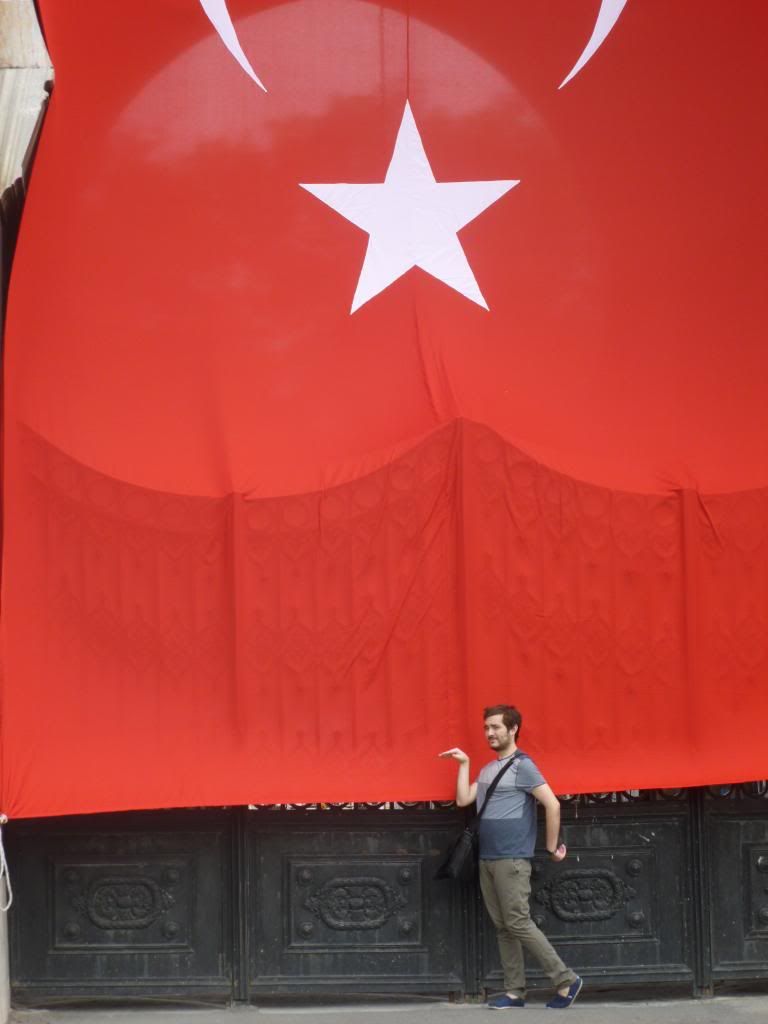
On the first day of the great Turkish adventure, Paul and I donned religion-appropriate gear and headed off to explore Istanbul's Old Town--Sultanahmet.  Pottering around in this part of town can take the best part of forever; it ranges from the Hagia Sophia to Sultanahmet Mosque to the Grand Bazaar and Spice Market to Topkapi Palace, which in of itself, can take the whole day to explore.
Again, massively overwhelming.

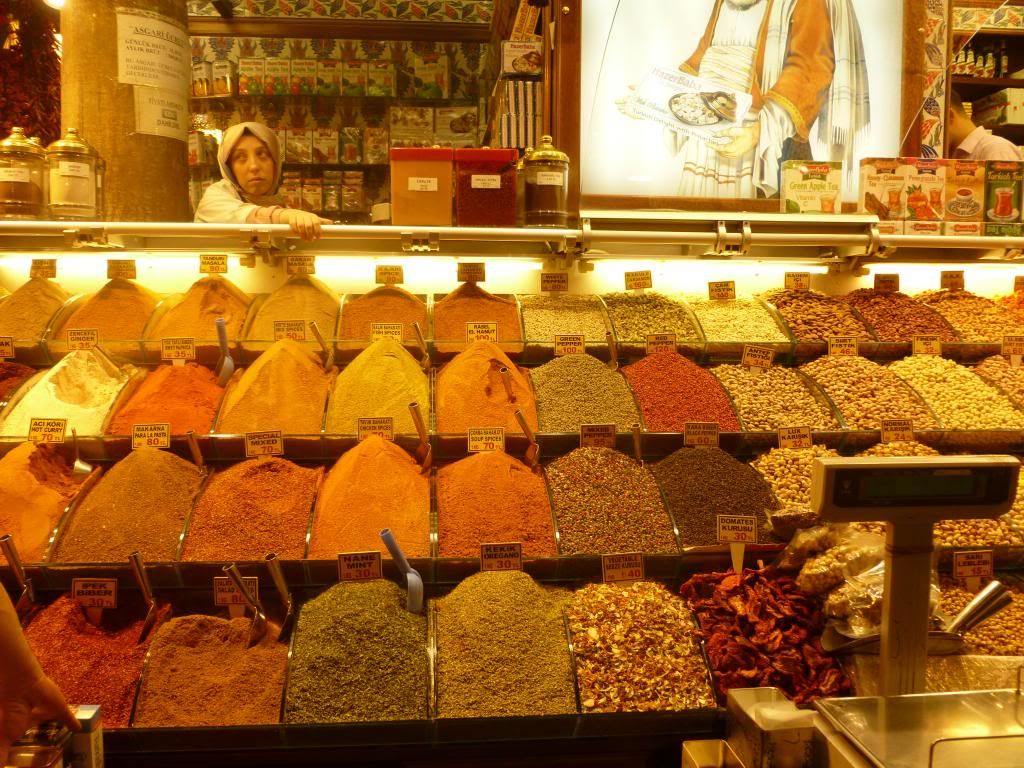
We spent three days on and off, with siesta breaks in between, exploring the old town and paying various entrance fees. The highlight was seeing Serena Williams and entourage towering above hordes of Turkish men in the Spice Market with her billowing height, massive biceps and bouffant hair.  There was no chance, post Istanbul Cup Win, that she was going to blend in.  And I must admit, I was a bit starstruck.  We tailed her briefly before heading back into one part of the maze or another.

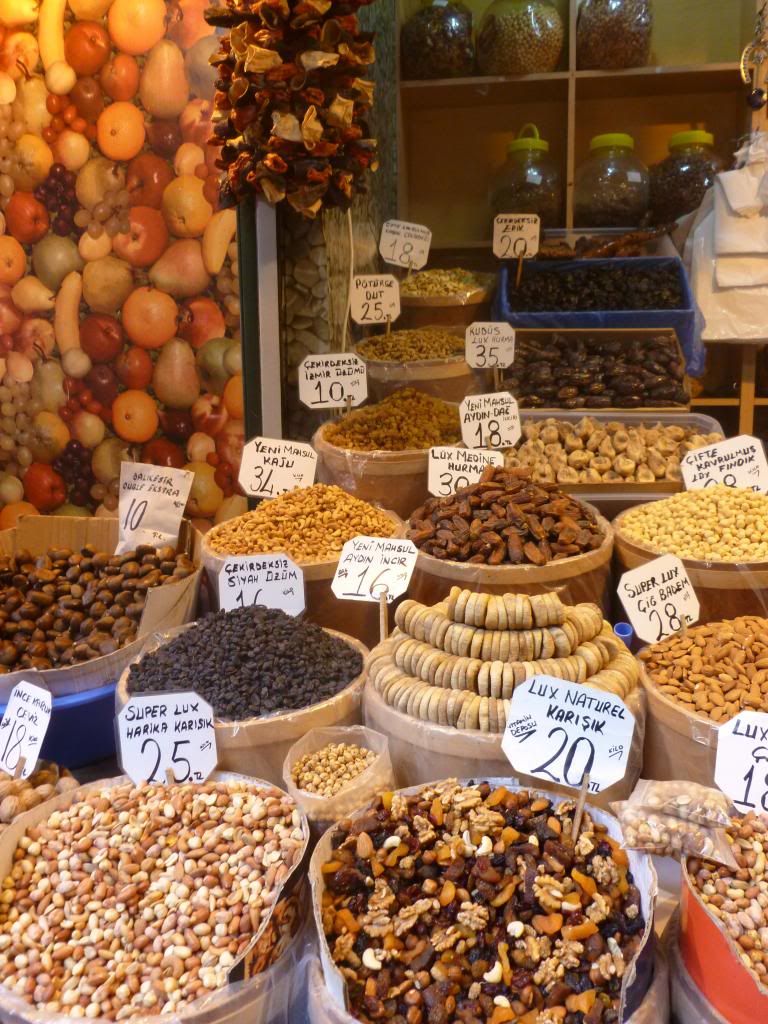
Spice Market:


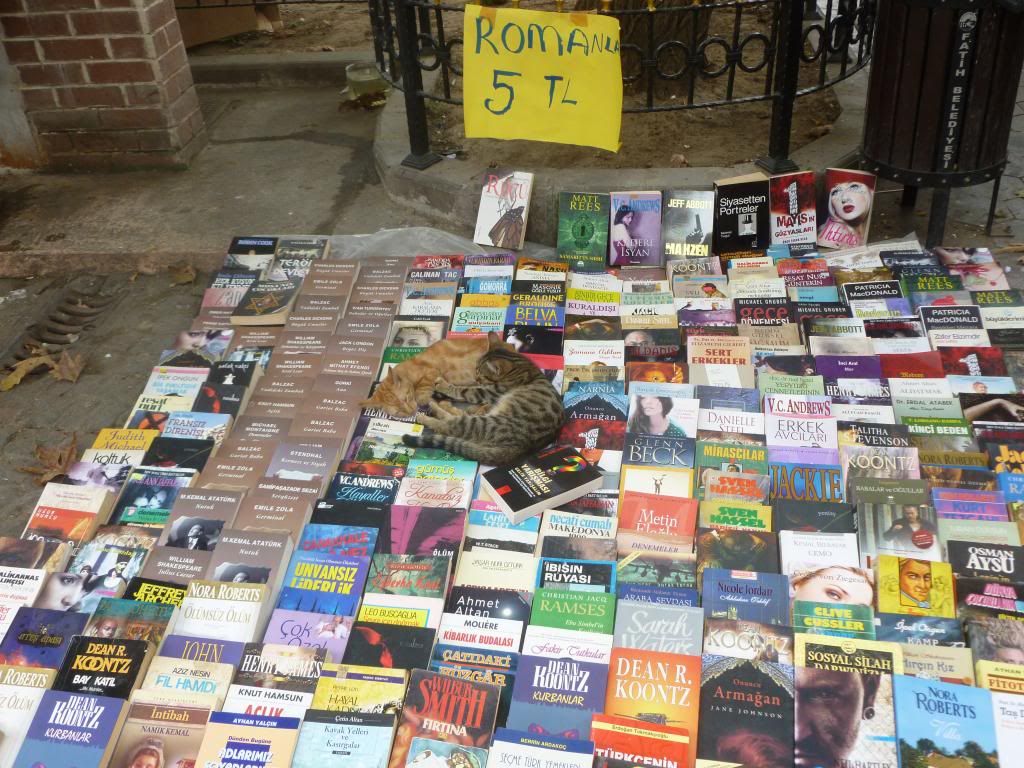
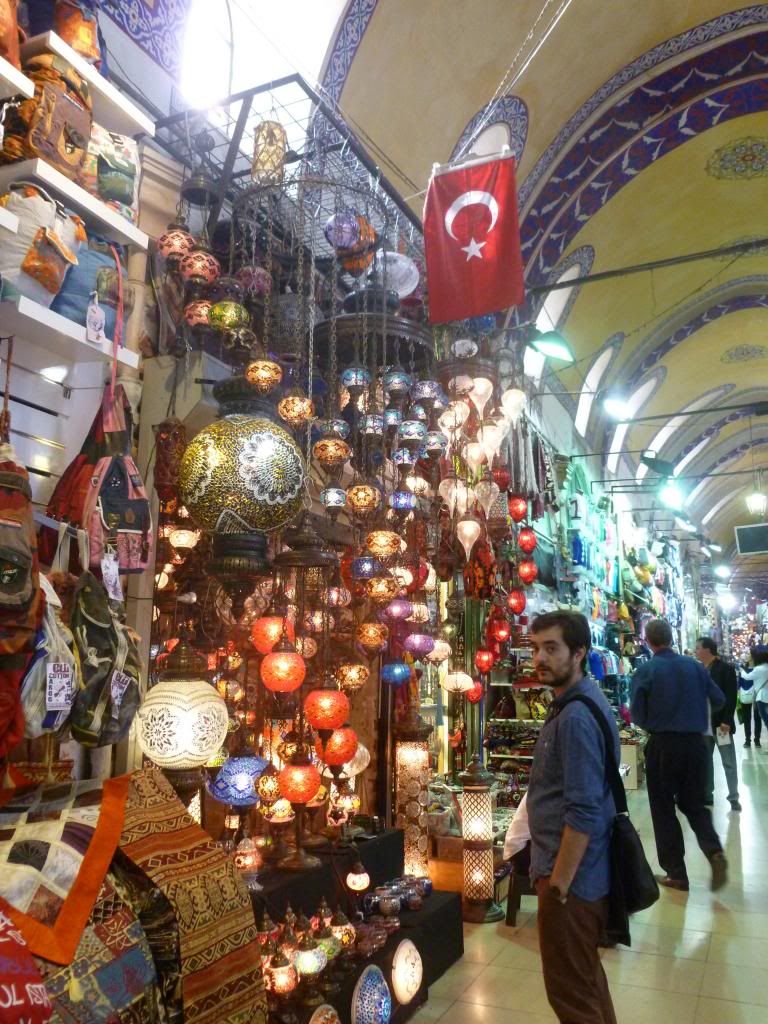
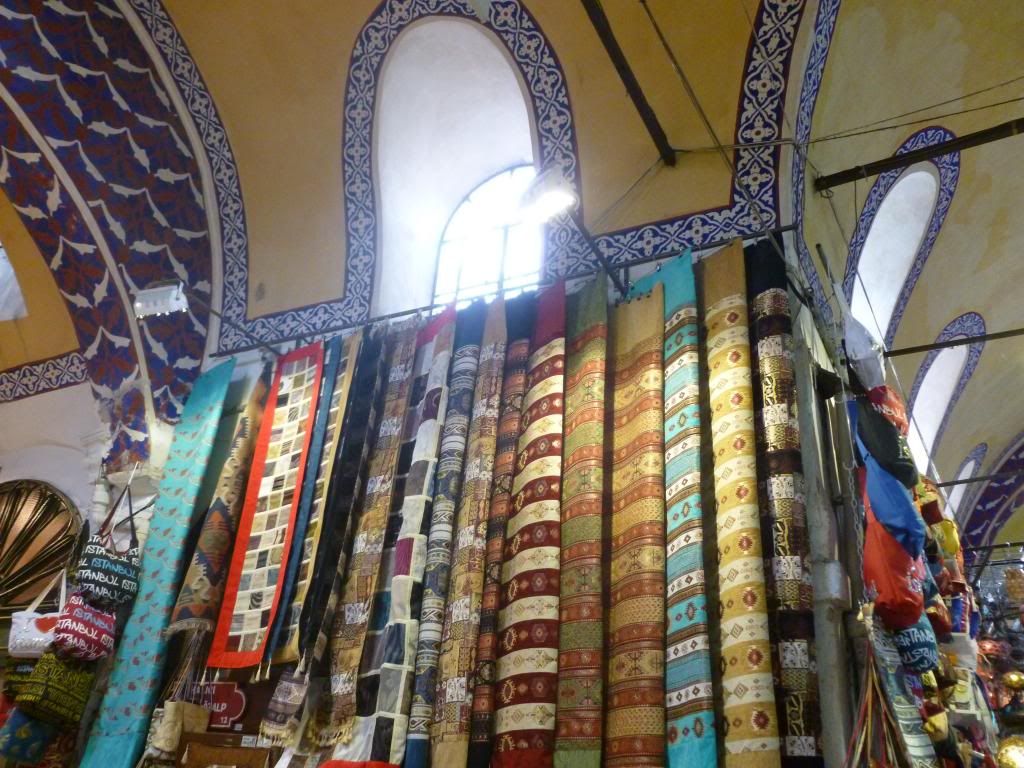
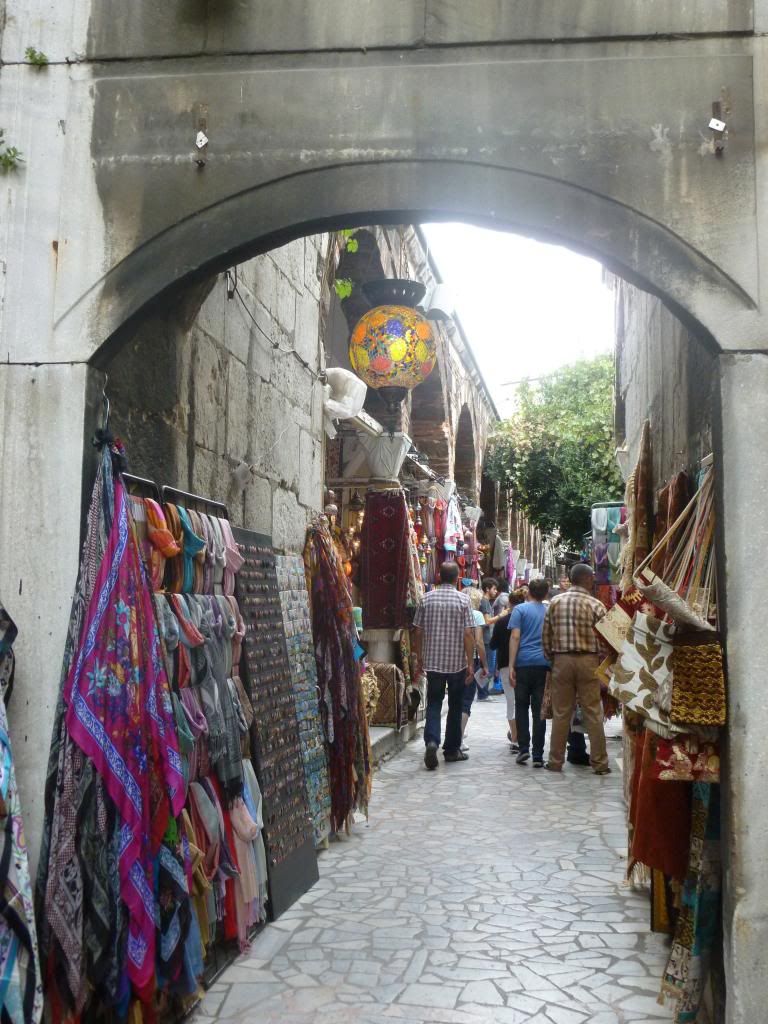
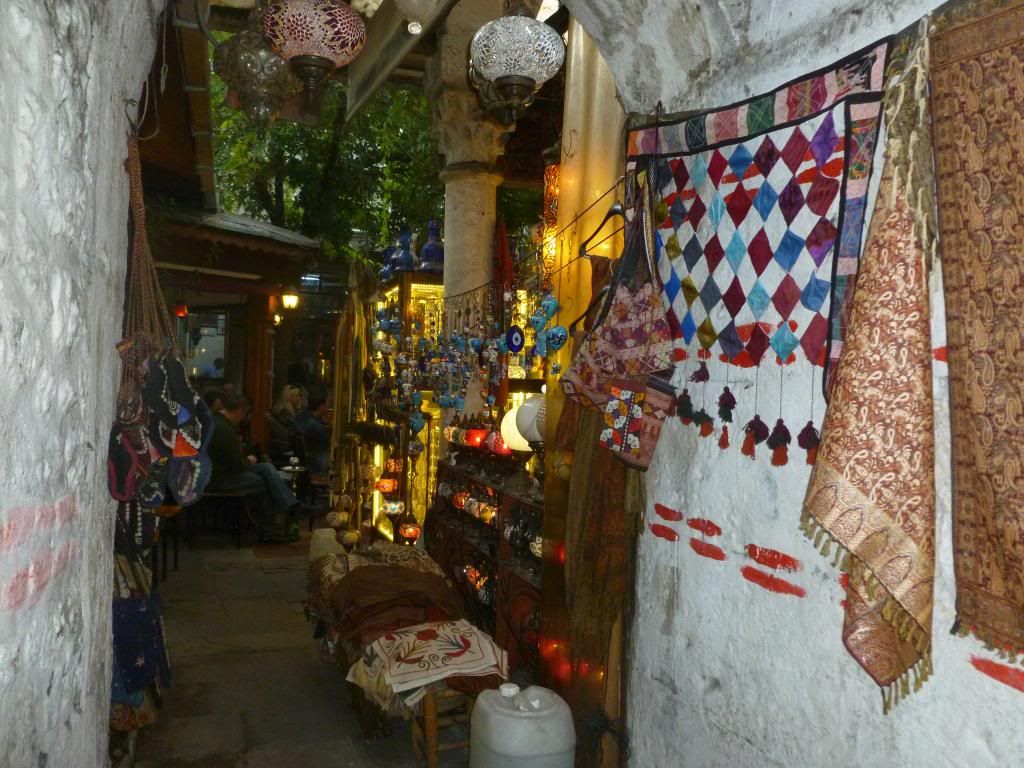
Other parts of various bazaars revealed lamps, carpets, candles, tiles, books, all at tourist prices.  Rumour has it, that the Grand Bazaar is home to over 4000 shops and stalls. Multiply that by two, the average number of men working in each stall and that's over 8000 men shouting to you that their wares are the best, the prettiest, the most moderately priced.  It was entirely spectacular. 

Different Parts of the (very) Grand Bazaar: 


We also discovered the gem of the Nargile bars--large open area bars decked in benches and cushions serving various flavoured teas and tobaccos, hookah style.  From time to time, a man with a bucket of burning coals comes around to replace the coal on top of individual pipes and then you're just free to sit, relax, drink tea.  It's like a coffee shop, only outdoors with smoke.  But not smoky smoke. Flavoured apple, strawberry, mint smoke.  Tasty smoke.  
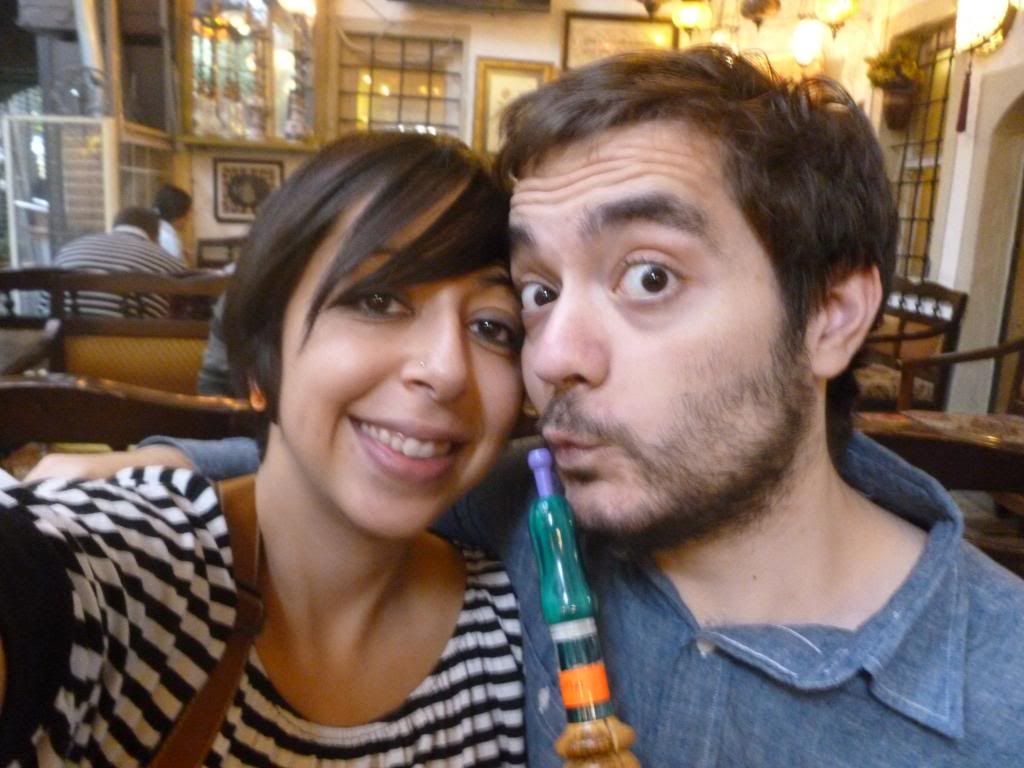


Delish!

3 November 2012

Istanbul

I spent the last week cashing in on a glorious birthday present--a five day trip to Istanbul for my 30th-birthday-festivus.  Paul, poor attempts at a bad Turkish accent included, whisked me away on an oh-so-not-ryainair flight to Istanbul, Turkey where we lodged on one of the city's seven hills.  And now, sadly, the festivus has drawn to a close.  The remnants of Hurricane Sandy are slowly making their way over to Europe, which is why I now sit under a thick layer of duvet with the heating on.  In Michigan, where my family live, it snows.  

But I digress.  The trip was good.  Istanbul is a beautiful city.  

I'm not completely certain it would be everyone's cup of tea because like most really big cities, it's up in your face assaulting your senses and pushing your boundaries.  And it's mammoth--ranging seas, rivers, continents.  Which is pretty daunting when it comes to being a tourist in a new place.  

But Istanbul kindly names its old places, just in case you forget what you're looking at or looking for.  You've got the Blue Mosque (blue-tiled on the inside), the Grand Bazaar (grand in its size, immenseness and ability to get you turned around, down and back in your original direction without even realising) and the New Mosque (new in the sense that it's only 400-years-old).  

And it's definitely got charm.  From the fishermen peddling their trade on the Galata Bridge, to the myriad narghile-cum-tea-bars dotted across europe and asia, to the wonderfully kind people we encountered on our journey, Istanbul left me with a much kinder (and realistic) impression of life in Turkey than Bodrum did three years ago.  

Pictures are, as usual, forthcoming.  For the moment, I need to sleep off the borek, turkish delight and 4am alarm clock sluggishness that's beginning to attack me behind the eyes.  

7 October 2012

Latvia and its love for Garlic

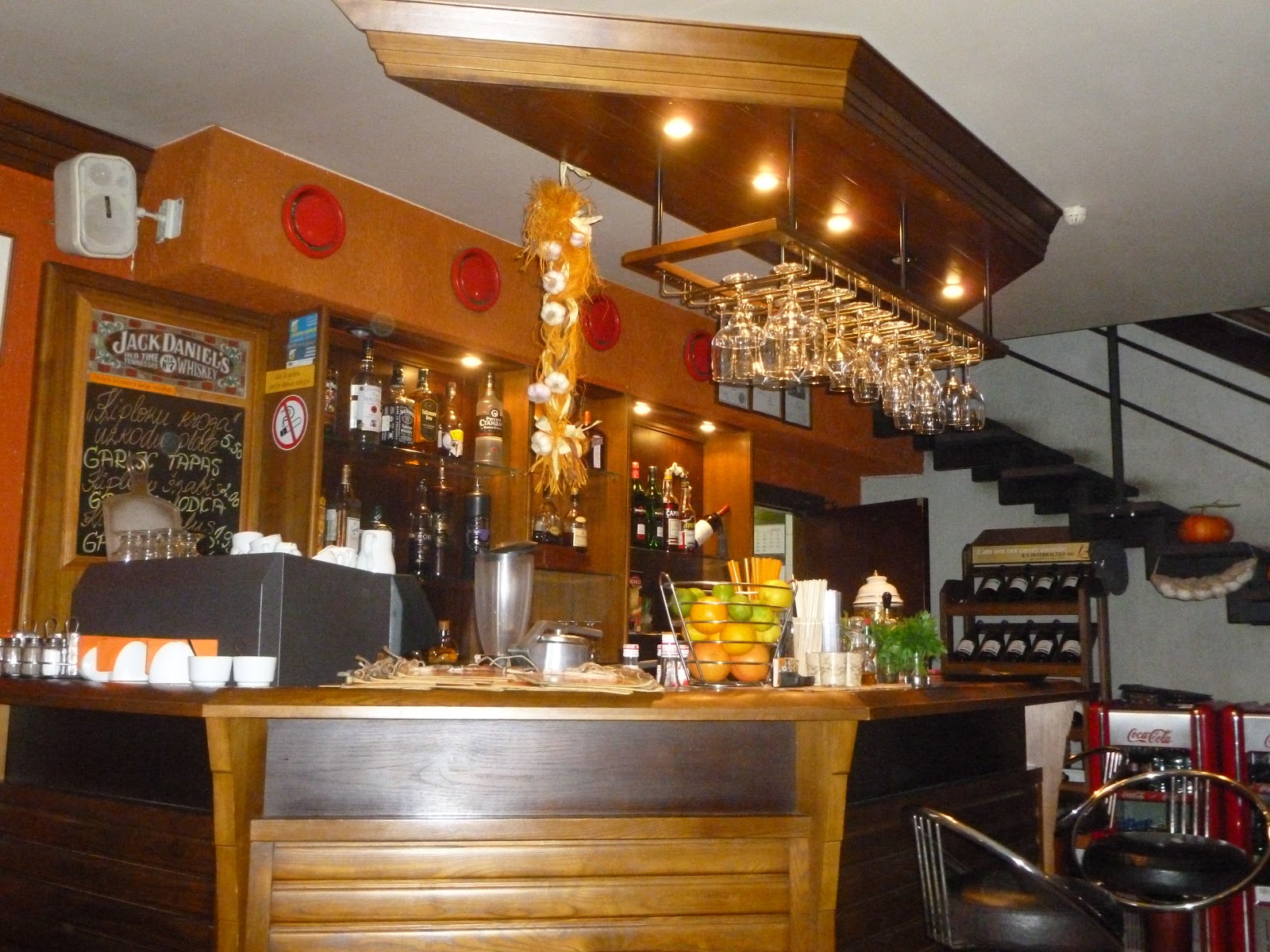
We rounded off our Baltic State holiday and delighted in finding last minute culinary and cultural delights the city had to offer.   From the outset of our trip, I was happy to note that Baltic cooking in all three nations delighted in garlic infused treats, particularly deep fried rye breadsticks served with a garlic dipping sauce. It was in this spirit that we came upon a simple restaurant on a cobbled side street in Riga's old town: the Garlic Pub. 

For those of you who know me, you'll know that garlic is in my top five of foods to adore and cherish.  I was ready for the garlic experience and the menu was chock full of choice--from garlic beer to pickled garlic, ranging across from garlic soup to garlic ice cream. 

Since the summer hadn't officially died yet, a few tables were strategically placed outside.  Inside, the rest were a collection of wooden benches and tables, to the effect of a Scandinavian Sauna effervescing garlic.       
                                      
The three of us opted for the garlic mezze--'a medley of garlic delights', their words not ours.  The plate came loaded with garlic stuffed olives, roasted garlic, garlic flatbread, pickled garlic, garlic infused green beans and garlic cheese.  

                                     
 Rosa and I, but not Judith, then made the further decision of washing it all down with a pint of garlic beer.  The beer, brewed in Latvia, was stored in casks infused with garlic.  It was then served with little flecks of pickled garlic to enhance the taste. Finally, it was topped off with a skewer of roasted garlic to nibble on in case you forgot what garlic tasted like.  


I got through about half my pint before the indigestion set in.  Heartburn shortly followed. A series of man-sounding and smelling toxic fumes escaped Rosa's and my mouth before we could put the whole ordeal behind us.  

Now this isn't to argue that the restaurant was bad. Far from it.  The service was delightful, the food that other people ordered looked and smelled like good food should look and smell, the prices were reasonable and it wasn't at all gimmicky.  Tripadvisor disciples swear by it: Tripadvisor Garlic Pub. None of these critics appear to be vampires.

I have to respect Latvia's love for the garlic but as for the beer, we'll agree to disagree. And my final opinion of Latvia as a whole still stands.  Go! Visit! You'll fall in love.


Riga by Boat

We got lucky with the weather on our last day and Rigans came out of the woodwork to enjoy the warmth in the park.  In this way, we encountered a small stand next to the city's tiny chain bridge, The Bridge of Love, advertising boat rides for cheap.  We paid 5 lat to hop on a boat with a small group of strangers and ride through the city via water.  
                                      
                                                  
The boat slowly meandered through Bastejkalns park which circles the city's old town before cutting under the central shopping mall, past the central market and onto the Daugava river which offered some stunning views of Old Town before slowly circling back in.  

Riga Rail Bridge


Magic Sand Riga, the sand castle park on the west side of the Daugava. 11 sand-carved sculptures stand on the side of the river whilst people build, play and throw sand around.  A pretty spectacular idea, actually. 
                                      

The ride was a fitting farewell to a city rich in quirkiness.  We topped it off with a stroll through old town, drinks and dinner.  

                                                
Where we found the above.

6 October 2012

Vilnius (what remains)

What remains of my memories (and photos) of Vilnius are relatively mundane but beautiful in that things-are-really-old kind of way.  With the remnants of the day's light, we climbed up series of slippery cobbles to Gediminas Castle, which is less castle and more lookout tower with some pretty stunning views of the city. 
 For 5 lita, you have the opportunity to peruse various historical artifacts before perching atop the turret and commanding the attention of the universe from a universally exceptional vantage point.  
                                                
To the one side, the Hill of Three Crosses stands as a monument to seven Franciscan monks who were tortured by a group of pagans before Lithuania converted to Christianity.  Apparently it's meant to symbolise the importance of Christianity to the Lithuanian nation.  
                                    
From another side, you face the Neris river and the financial district of Vilnius.  

And from the most stunning side, you've got a view, through an old stone window which only seeks to increase its charm, of the city's old town.  
                                                
Finally, I close the Lithuanian chapter of my blog with a few scattered photos of things I found whilst looking for nothing.  Including: 
An artisan's lodge and the man who made everything, EVERYTHING, out of wood. 

The central town square 

The creepy headless woman.

And a high-school aged band who really knew how to play American blues.  

So Vilnius really is a city after my own heart.  Give it a chance; you won't be disappointed. 

Vilnius and religion

Vilnius is a city of quirk. A city of cute cafes and arty independent shops. A city of pastry lovers.  A city with considerable character in that not-too-many-people-know-too-much-about-us way.  Maybe that's what keeps in real--tourists come but they blend into the background.  It's off the Americans-go-to-Europe tourist path.  No disrespect to Paris or Barcelona or London, but it kind of feels like people have more set reasons to go to Lithuania; they're not merely aiming to fulfill the tick list.

Alas.

Vilnius is also a city of religion. So a bulk of tourists we saw wandering around were middle aged prayer-type folk.  They did the Pope John Paul tour.  Being the first pontiff to visit the country in its history afforded him a series of plaques, statues and camera-happy snapping stations.  With roughly 80% of the population identifying themselves as Catholic, I suppose it's no big surprise.

The churches were everywhere though. Dotted across the old town, on the outskirts and hidden behind soviet-era council blocks. Gothic, modern, every style.
                                    

And like most Catholicly religious buildings, their grandeur was immense.  


 Towering (pardon the pun) above the old town
What was more surprising then was the richness of other houses of worship across the city.  I took my first peeks into a Russian Orthodox Church adorned with a gold shrine, without pews and centered around an (admittedly creepy) glass box encasing two long-dead masters of worships covered in cloth with their skeletal feet clad in purple velvet slippers peeping out.  


And most saddening, perhaps, was the dearth of synagogues in a city whose population was once 50% Jewish.  What remains is one temple, on the outskirts of old town located directly across from the yarn shop.  A pointy fence and locked gate shield the entrance from intruders; a doorbell is the only indication that the synagogue admits visitors--worshiping or otherwise.
                                    
Luckily, Judith and I were in the right place at the right time.  A woman who worked there rang the bell for entrance and a small, short man wearing a white yarmulke admitted both her and us. We were ushered to come in, look around and take pictures if we wanted.  And i don't know why it surprised me so much, but this remaining temple looked a whole lot like a church.
                                     
                                                 
 minus the Hebrew and many memorials to family members lost during the Holocaust.
 So maybe that sums up a city of quirk. A city of cute cafes and arty independent shops. A city of pastry lovers. A city of tolerantly-minded religious and non-religious people.